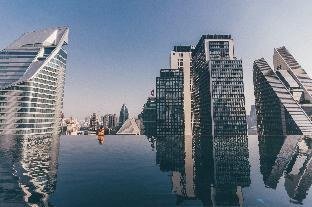
The Okura Prestige Bangkok’s swimming pool projects from the north side of the building, making it one of the property’s most distinctive spaces. It is also a practical point of difference: the hotel explains that the pool is heated and can be predominantly shaded around the winter-solstice period. The appeal is not simply an open deck for all-day sun. Downstairs, the Ploenchit setting and station connection make this a city stay with a clear transport advantage.
A pool where shade is part of the design
The official pool page lists daily hours of 06:00–22:00 and explains that recycled heat is used to warm the water. The north-facing position affects sunlight, so a guest whose holiday centres on sunbathing may see the deck differently from someone who wants an early swim with a skyline outlook. The architecture provides the view; it does not guarantee sunshine on a lounger throughout the day.
A guest posting on Trip.com in October 2026 particularly liked the changing pool outlook through the day and evening. Another guest liked the location and pool but felt the facilities showed their age. These are not mutually exclusive impressions: the unusual pool remains a reason to choose the property even when a visitor expects some older fittings elsewhere.
The standard Deluxe has useful detail
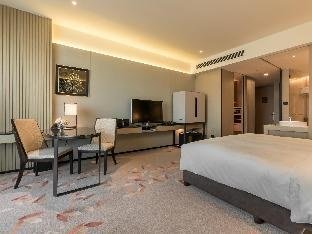
The official Deluxe room description gives a size of 43–47 square metres, king or twin bedding, a walk-in wardrobe and a desk with a multimedia panel. The bathroom has a separate bath and rain shower, with a separate powder room and Japanese-style bidet. That separation makes the layout more useful to understand than the general description of Japanese luxury.
Room controls include a bedside touch screen, while the equipment list includes a USB charger and coffee and tea facilities. Yukata are listed as an in-room feature. Connecting rooms, cots and rollaway beds appear as requests, rather than as guaranteed fittings in every Deluxe room. The room photograph here is a property image; its exact category has not been independently identified.
Japanese dining extends beyond breakfast
The official dining directory lists Yamazato, Elements inspired by Ciel Bleu, Up & Above and La Pâtisserie. Yamazato itself distinguishes its main dining service from Teppanyaki Sazanka and Sushi Yamazato. Its current page publishes lunch and dinner periods and asks guests to allow time for reservation confirmation. These are separate dining experiences, rather than one restaurant with a single format.
That range adds substance to the Japanese identity suggested by the room details. Someone interested in a planned Japanese dinner has more reason to spend an evening at the hotel than a traveller who only wants the breakfast mentioned in guest reviews. A reservation or meal inclusion should still be understood separately from booking the bedroom.
Rail access is more consistent than every service impression
The hotel’s official FAQ describes access to Ploenchit BTS, and an October 2026 Trip.com guest specifically praised the direct connection for avoiding exposure to sun and rain. That is a concrete benefit for a visit that involves repeated train journeys. It is different from using a nearby station only once on arrival.
Guest opinions of service are less uniform. One October guest enthusiastically praised anniversary arrangements and breakfast at Yamazato; another found the service less warm than expected while still enjoying breakfast and the transport link. Neither experience should be used as a promise of identical treatment for every traveller.
The Okura has a strong case when a separate bath, generous Deluxe-room space, a heated pool and a direct station route all matter. The pool’s shade pattern is particularly relevant for someone comparing it with a resort-style sun terrace. The more cautious part of the decision is whether older room finishes will matter more than the practical bathroom layout and easy access to the city.
Sources
We may earn a commission from eligible bookings made through our Agoda links.